Proof the Automation Paid for Itself
Every tool you add promises to save you time. Some do. Some save you an hour on Tuesday and cost you two on Friday cleaning up after them. You won't know which kind you bought by how it feels. You'll know by counting, before and after, the same way both times.
Chapter 7 gave you a weekly count for your calls. This chapter does the same job for anything automated you add from Part Two, like a text reply, a booking link or a secretary on the line. You'll write down what it gives back and what it takes to keep it running. Then you'll be honest about the difference, even when the difference is zero.
The honest part is the hard part. Nobody likes writing down that something they paid for, or gave up weekends to set up, didn't work. So let me go first, with something of mine that doesn't.
"You'll notice that my long form videos absolutely bomb. I know that. Been working on it, trying to figure it out, but I test, I test, I test, I test. I look at the retention."
My videos bomb and the numbers told me first
Nobody had to sit me down and break the news. The numbers did it. You can post for months on a feeling that things are going fine, and the numbers will tell you otherwise the minute you open them. So opening them is part of the job, every day, good news or bad.
The same numbers told me something less fun. People like the videos I film in my backyard better than the ones I film indoors. So I should be filming outside. The catch is that I read from a screen, and a screen is harder to set up out there, so for now I film inside and know what it costs me. Knowing makes it a choice. Not knowing would make it a mistake.
Short videos went the other way. It took me something like three hundred posts to find a short format that holds people, and the only reason I found it is that I kept counting after every one. Most of those posts lost. The count is how I found the ones that didn't.
When I set up systems for my dad's tent company and for my own businesses, the last step is always the same: measure what comes out. A system nobody measures is a guess that happens to be running.
A before-and-after scorecard for one change
Change one thing at a time. If you add a text reply and a booking link in the same week, and bookings go up, you won't know which one did it. You might keep paying for the one that did nothing.
Before you turn the change on, write down the before. Use the same number of weeks for the after, and the same source both times, like your carrier's call log. Then track these lines:
- Hours a week you spend on the job the change is supposed to take over
- Calls answered that used to go to voicemail
- Missed calls you called back the same day
- Bookings that came from those calls
- Mistakes the change made that you caught
Now let me do the math out loud. Say the change is a text that goes out when you miss a call. Before, you missed 20 calls a week and called back 8 of them the same day. Four weeks after, you still miss 20 a week, but now you call back 14 of them the same day, and two more of those turn into bookings each week. Setup took you two hours. Checking on it takes ten minutes a week. That one paid for itself.
Say instead that bookings didn't move at all. Write that down too. The change might still be worth keeping if it gives you hours back, and it might not. You still make the call. The scorecard keeps you honest about it.
And the decision doesn't have to be keep it or kill it. If the change pulls its weight at night and does nothing during the day, keep it for nights and take the daytime back. Coverage can move around as the numbers come in.
When a line refuses to move, that line tells you where the leak is. Calls answered went up and bookings stayed flat? The leak is after the call. Either the details never made it onto the order (Chapter 6) or the callback came too late (Chapter 4). Hours went down and mistakes went up? The tool is doing the job fast and badly, and you're paying for it in callbacks and apologies.
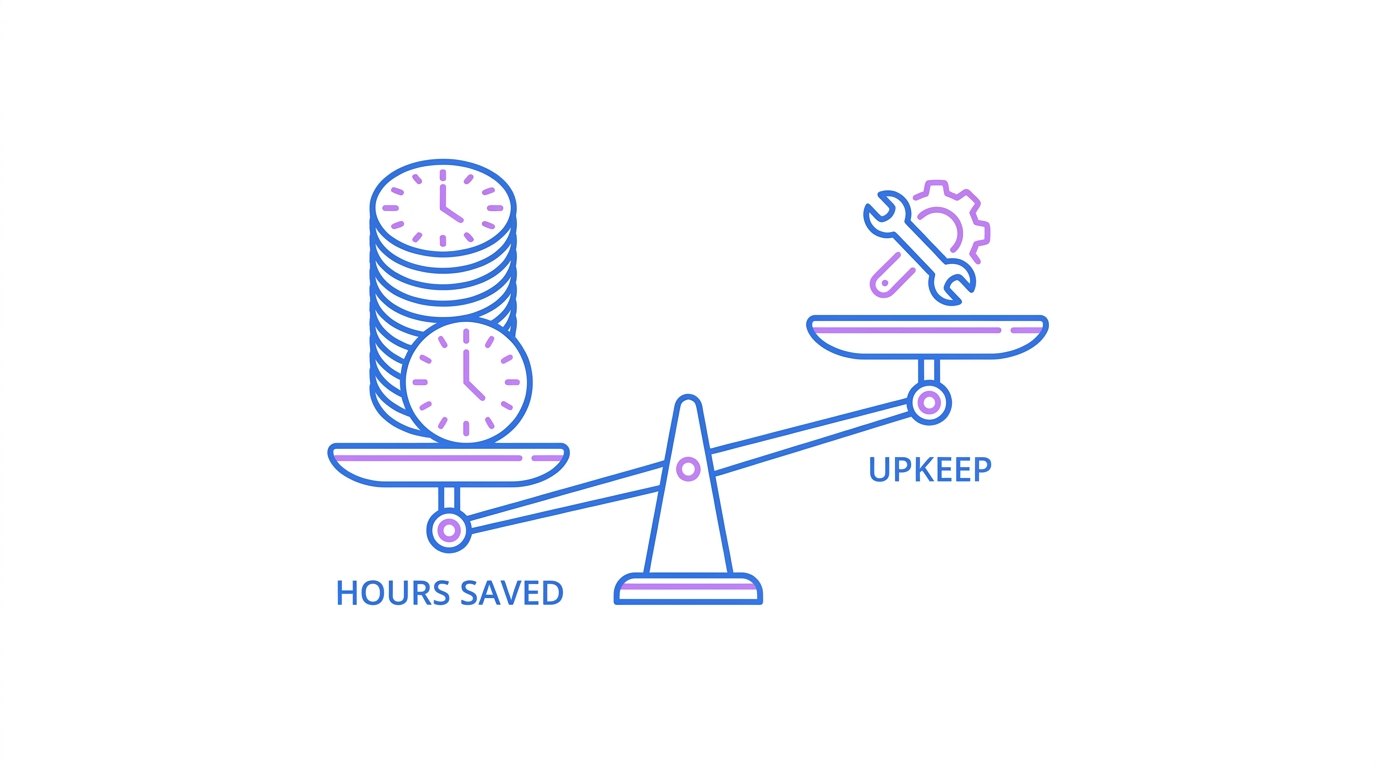
Then weigh the side owners skip, which is upkeep. Every system needs somebody looking at it. Count the minutes you spend checking the tool and fixing what it got wrong. AI can take work off your plate and still hand you a pile of new little jobs in return. When the upkeep weighs more than what the change saved, turn it off. Call that a win. You found out for the price of a month.
Call your own business like a customer would
The best way to check a phone setup is to be the customer. When researchers wanted to know how fast companies responded to new leads, they didn't survey the companies. They sent test leads to 2,241 U.S. companies and timed the replies, in what became Harvard Business Review's 2011 test-lead audit. Those were web-form leads at mostly larger firms, and one of the authors ran a sales-software company, so don't borrow their numbers for your phone. Borrow the method.
Get a phone that isn't yours. Call your business at the hour you're busiest, when you're out on a job. Call again after hours. Each time, write down four things: how many rings before anyone or anything picked up, what the caller heard, whether the details reached you, and how long it took you to find out about the call.
Do it before the change and again after it, at the same hour on the same day of the week. If you can't stand listening to it, have a friend make the calls and tell you what happened. The first mystery call tends to be humbling. Humbling is the point.
Two numbers that only look comparable
Numbers only compare when they were counted the same way. The U.S. Census Bureau flagged exactly this in its own survey of businesses. In November 2025 it changed the wording of its AI question, from asking whether a business used AI in producing goods or services to asking whether it used AI in any business function. So a rate from before that change and a rate from after it answer two different questions, even though they come from the same survey.
Your version of that problem shows up the day you switch tools. Your carrier's log counts a missed call one way. A new system might count the same call as answered, or not count it at all. So pick one source for the before and the after. If you have to switch sources, run both side by side for two weeks and see how far apart they land before you compare anything.
Chapter 7 mentioned that KaiCalls publishes its call count every month. The part worth copying is the fine print. The working file behind KaiCalls' month-one ledger (September 2026) spells out the date window, says that demo and test accounts were left out, and names one thing we didn't claim because no clean record existed for it. Hold your own scorecard to that standard, even if nobody but you ever reads it.
If you run a secretary on your line, the call records are one place those counts can come from, since every call leaves a record you can go back and read. Before you plan on the counts landing anywhere else, check the KaiCalls integrations page against the calendar and CRM you already run, and only count on what connects today.
Common questions
Questions this chapter gets asked
How do I know if automation is saving my business time?
Count the hours before and after, over the same number of weeks, from the same source. Write the before down first, because memory rounds in the tool's favor. Then subtract upkeep, meaning the minutes you spend checking the tool and fixing what it got wrong. If the hours saved beat the upkeep, it's working. If they don't, turn it off and treat that as a useful answer.
How do I test my own business phone line like a customer?
Call it from a phone that isn't yours, at your busiest hour and again after hours. Write down how many rings it took, what you heard, whether the details reached you and how long it took you to find out. Repeat the same calls after any change, at the same hour and on the same day. If listening is painful, have a friend call and report back.
What should I measure after adding an answering service?
Measure calls answered that used to be missed, same-day callbacks, bookings from those calls and mistakes you caught. Where recordings are turned on, you can test more than counts. As I put it in one of my product videos: "You can test what openings work. You can test, hey, maybe Kai doesn't do that well during the middle of the day, and you take the calls and then Kai handles your after hours."
How long should I test a new system before deciding?
Give it a few weeks, and compare it against the same days of the week and the same hours as your before count. After-hours calls, follow-ups and the quality of your leads usually show up within the first few weeks. Don't judge it on day two, and don't let it run for six months with nobody counting either. Pick an end date the day you turn it on.
2.4 MB PDF
Get the PDF
The whole book in one file, with the figures, to read offline or pass to someone else.
Download the PDF