When the Call Is Answered but the Order Never Changes
Everything up to now has been about getting the phone picked up. This chapter is about the minute after you hang up. Because a call that gets answered and then goes nowhere is a missed call with extra steps.
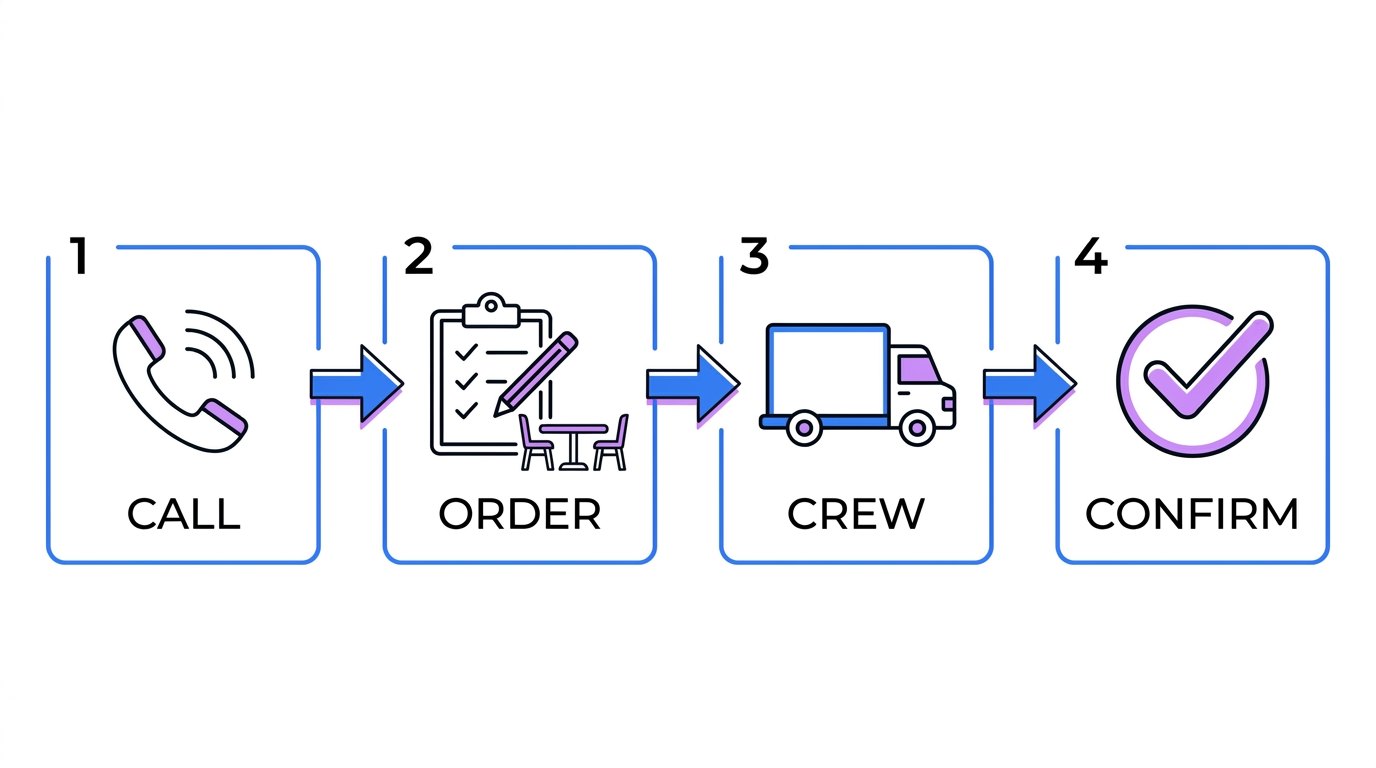
Event customers don't call you once. They call to book, then they call back when the guest count goes up or when they want to move the start time. You hear from the same client for the whole life of their event. Every one of those calls changes something, and every change has to travel from whoever picked up to the order your crew loads the truck from.
Take one call where that trip didn't happen, at a rental business we answer calls for. A customer phoned about an order they had already placed and asked for a couple of extra items. Kai picked up, got the request right, was polite about it, and ended the call. Later I went back through that call.
"Problem is it said we're gonna have our team add a table and chairs, and now they need to know that they need to add a table and chairs to their order. So his system isn't fully hooked in to the whole thing, but it is what it is. I told him that's the next step."
The call went fine and the order stayed the same
Think about delivery day for that customer. They're sure it's handled. They heard it on the phone. Meanwhile the crew loads the truck off the order, and the order says exactly what it said last week. So the truck shows up short, and your crew is standing in a backyard explaining something they never heard about.
Nobody on that call did anything wrong. The phone did its part. The gap sat between the phone and the order, and nothing was built to carry the request across it.
And that gap is worse than a missed call in one way. A missed call loses a job you never had. A dropped change can sour a job you already booked, with a customer who was promised something out loud.
In a lot of small businesses, change requests travel by memory. Maybe a note makes it onto a sticky pad. Maybe it lives in a text to whoever's in the shop that day. It works fine till the week you're slammed, and then it's the first thing to go.
So this chapter covers what has to leave every call, where it goes, who confirms it back to the customer, and the promises nobody on your phone should make on their own. That last part includes software, ours too.
Five details every call has to hand off
Whoever picks up, your nephew or a secretary, the call isn't finished until these five things are written down somewhere your crew will see them:
- The caller's name, spelled the way they spell it.
- A number that reaches them, which isn't always the one they called from.
- The event date, and which order it belongs to if one already exists.
- The delivery address.
- What changed, in plain words: add, remove, move, or cancel, and how many.
Name, number, date, address, change. Tape the list next to the phone.
Now the free fix. Pick one place where every call's details land, and only one. Make it the order sheet itself, or a notebook by the phone that one person owns. Everybody who answers the phone writes there and nowhere else. Not a text to your spouse, not the back of a receipt on the dashboard.
Then a person reads that one place the same day, before tomorrow's trucks get loaded. Put a name on it. If it's you, it's you at 6 every evening, and you move each change onto the order yourself. A list that gets read tomorrow is a list that got read too late.
Who tells the customer it's done
A change is done when the customer hears it's done from the person who changed the order. Writing it down is only step one.
A caller might hear one of two sentences at the end of that call. One says the team will take care of it. The other says it's on your order for Saturday. The first is a promise somebody else has to keep. The second is a confirmation, and only the person holding the order can give it.
So the free fix has a second half. Whoever moves the change onto the order sends the customer one short message: what changed, and the date it's for. A text is fine. A quick call is fine. What matters is the customer hears it from somebody who looked at the order.
If you text customers from your business line, know the rules first. The wireless industry's messaging principles from CTIA, published in May 2023, expect a business to get a customer's consent before texting them and express written consent before any marketing text. They also expect you to honor it when somebody asks you to stop. CTIA treats marketing texts more strictly than other messages, and it still expects consent for both. Put one line in your greeting or your paperwork, and get a yes.
This isn't legal advice. If texting is a big part of how you run, get someone who does this for a living to look at your setup.
Promises nobody should make from the phone
The free fix runs out on your busiest days. The notebook only works if somebody writes in it. On a Saturday when every hand is on a tent, or at 9 at night when the phone rings in your pocket at dinner, the note doesn't get written. The call gets answered and the details stay in one person's memory.
Kai covers that gap. When he answers, he takes the caller's name, their number and what they need, asks the questions you told him to ask, and texts you the details after the call. If your Google Calendar is connected, he can book right into it using your live availability. If it isn't, he captures the request and you approve it later.
He only changes what he's hooked into. If your orders live in a system Kai isn't connected to, he can take the change and send it to you, and a person still has to put it on the order. That was the exact problem in the story at the top of this chapter. The phone half worked. The order half wasn't connected yet.
So whoever answers your phone, a person or a secretary, needs a short list of things they never say on their own:
- A crew or an item is available, until your company confirms it.
- A price you haven't written down for them.
- An arrival or delivery time nobody on your team has agreed to.
- That a change is made, when they can't make it themselves.
Kai runs on the same list. He won't promise a crew is available until your company says so. He won't quote a price unless you've loaded your pricing. If he doesn't know, he says so and takes the details. For a change he can't make himself, set his wording so he tells the caller he'll pass it to the team and the team will confirm it with them. Then your person-reads-it-the-same-day rule does the rest.
You can see how one ownership group runs the same intake across more than one rental brand in the multi-location tent rental case study, and one of the businesses in that group is my family's.
Common questions
Questions this chapter gets asked
How do I make sure phone orders get added to my booking system?
Pick one place where every call's details land, like the order sheet or a single notebook by the phone, and have everyone who answers write there and nowhere else. Then put one named person in charge of reading it the same day and moving each change onto the order before trucks are loaded. If software answers your phone, check what it's connected to. It can only update the systems it's hooked into.
What information should I collect on every customer call?
Collect five things before the call ends: the caller's name, a number that reaches them, the event date and which order it belongs to, the delivery address, and exactly what changed, including quantities. Write them in the one place your crew checks. A call that ends without those five details is a call somebody has to make again, usually on the busiest day of your week.
Should whoever answers my phone give prices or delivery windows?
Only if you've written them down and approved them. Whoever picks up, a family member or a secretary, should never quote a price, confirm a crew or promise an arrival time on their own. The safe line is that they'll pass it to the team and the team will confirm it. A wrong answer said confidently on the phone costs more than a callback later that day.
Can I text customers to confirm an order change?
Yes, and it's one of the better ways to confirm a change, as long as the customer agreed to texts. Industry guidelines expect consent before texting and written consent for marketing texts. Business texting from a regular ten-digit number runs under the 10DLC standard, which gets registered through The Campaign Registry, so ask your phone provider whether your number is registered.
2.4 MB PDF
Get the PDF
The whole book in one file, with the figures, to read offline or pass to someone else.
Download the PDF