Calling Back Before They Call Someone Else
If you're like a lot of owners, the callbacks happen last. At night, on the couch, scrolling through the missed calls and trying to remember which number was the person asking about next Saturday. A lot of them don't pick up. You leave a voicemail or two and call it a day.
Calling back is its own job, and it deserves better than the leftover ten minutes of your night. It has an order and a clock, and it works a lot better with a text in front of it.
Before I built anything for phones, I ran marketing for a group of eighteen car dealerships. The problem I walked into there looks a lot like the missed-call list on your phone tonight.
"So your new targets aren't actually new. You have to steal them from other brands and bring them back over, but you generally already own their email, phone number, and everything like that. What they didn't have was good processes for following up with those people efficiently and effectively."
The clock starts when the ringing stops
Somebody who called you and got nobody is still shopping. They didn't stop needing a tent or a quote because you were busy. They're calling the next business, and every minute you wait is a minute somebody else might pick up.
How fast is fast enough? A lot of the speed research you'll see quoted comes from companies that sell sales software, so read it with that in mind. The 2007 InsideSales.com lead response study, done with an MIT researcher, reported that the odds of reaching a lead called within 5 minutes drop 100 times by the 30-minute mark. That study looked at web leads, and it's a vendor's own research. It's no promise about your phone.
The direction still matches what Chapter 1 laid out. Interest cools fast, and the first business to have a real conversation with the caller has the best shot at the job. You can't call everybody back in five minutes while you're on a job. You can make sure the calls that matter most get called first.
Sort the list before you dial
A missed-call list is a few lists mixed together, and calling them back in the order they came in wastes your best minutes on your least important calls.
So sort them. The rule I'd use has three tiers, and you can move the lines to fit your business.
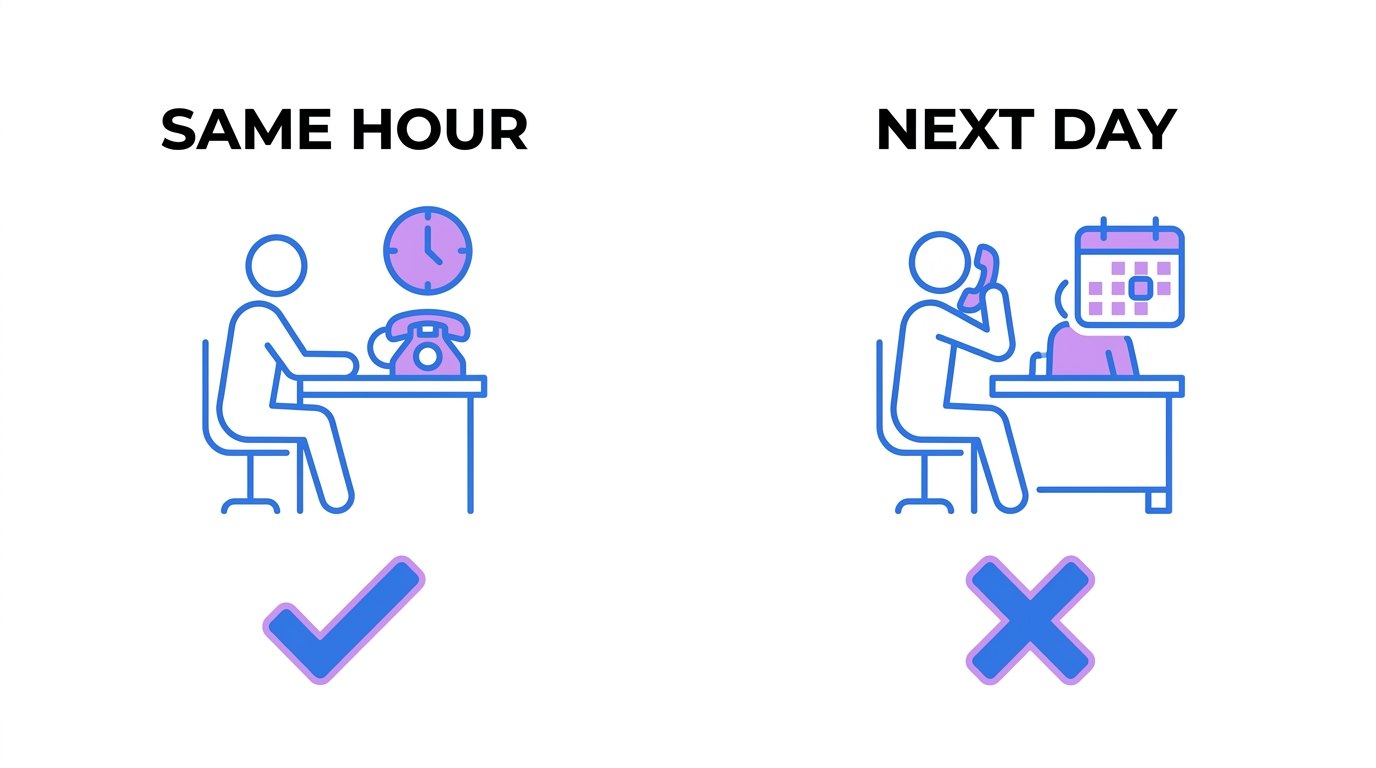
Call back at your very next break. This tier is anybody with a date coming up soon, any booked customer with a problem or a change, and anybody whose voicemail says today. Booked customers belong here even though the money is already in. Somebody throwing an event calls you again and again for the life of that event, and those calls protect a job you've already won.
Call back in your same-day callback block. New quote requests, general questions and numbers you don't recognize that left no message. Treat every one of them like a customer until you know otherwise, so they get a same-day callback with a text first.
Call back when you get to it, or don't. Vendors, sales pitches, the marketing company that calls every Tuesday. None of these should ever push a customer down the list.
Sorting only works if you know what each caller wanted. For the voicemails, you do. For the blank missed calls, the text in the next section is how you find out.
Text first so your number is not a stranger
Chapter 1 covered the Pew Research Center finding that most Americans don't answer calls from numbers they don't know. The same 2020 Pew survey found 67% say their general practice is to let an unknown number ring but check a voicemail if one is left. So a cold callback from your cell has a good chance of going nowhere, and a voicemail has a decent shot at being heard.
That points to a simple order. Text first, then call, then leave a voicemail if they don't pick up.
The text tells them who's about to call so your number stops being a stranger's number. Something like this works:
Hi, this is (your name) with (your business). You called us a little while ago. Expect a call from this number in about 5 minutes. If texting is easier, just reply here.
Some people will reply and never need the call. Let them. A booked job over text counts the same as a booked job over the phone.
Then call. If they don't answer, leave a short voicemail with your name, your business and when you'll try again. Keep the text and the voicemail about the call they made. Chapter 3 covers why a reply to someone's call is a different thing from a marketing text.
Go back through last month's missed calls
Same lesson as the dealerships. The people most likely to buy from you already raised their hand and gave you their number. And most businesses never go back to them.
Your call history is that list. Scroll back through the last 30 days and find every number you never reached and never talked to. Send each one a short text. Say who you are, say they called a while back, and ask if they still need help with it.
Some will have booked someone else already. Some will have put it off and still need you. Either way it costs you a few minutes and no ad money, because these people already found you once.
Where calling back on your own runs out
Everything above is free, and for plenty of businesses it's enough. It runs out in a couple of places. You can only call back when you're off the job, so on a long day the whole list waits until evening. And a missed call with no voicemail is a blank line you can't sort, because you don't know if it was a customer with a date next week or a robocall.
So this is where I'll tell you about what I built. KaiCalls puts a secretary named Kai behind your business phone. On the smallest plan, Kai Backup, your cell rings first, so you still pick up everything you can. If you don't pick up, Kai answers, gets the caller's name and what they need, and texts you the details.
That fixes the two places the free version breaks. A caller you can't get to talks to Kai instead of listening to a ring. And every missed call on your list comes with a reason next to it, so you call back the important ones first and skip the rest.
If you want to see what that looks like on a real phone line, KaiCalls published an event rental case study from a tent and party rental company. It's the same family business from Chapter 2, my dad and uncle's, so read it as a family story and weigh it that way.
Kai Backup is $10 a month for about 20 calls answered by Kai, per KaiCalls' pricing page as of September 2026. Prices and plans change, so check that page for what's current before you decide anything.
Some businesses shouldn't buy it. If your business gets only a handful of calls a month, or you already pick up nearly every one, skip it. Use the free fixes from Chapter 3 and the callback order in this chapter, and keep your money.
Common questions
Questions this chapter gets asked
How fast should a small business call back a missed call?
As fast as you can, and in order of what's at stake. Call back booked customers and anyone with a close date at your next break, and everyone else the same day. Speed matters. A 2011 Harvard Business Review study found firms that tried to reach a web lead within an hour were nearly seven times as likely to have a meaningful conversation as firms that waited even an hour longer. Those were web leads, so treat it as direction.
Why don't customers answer when I call them back?
Because to them you're an unknown number. According to a 2020 Pew Research Center survey, eight-in-ten Americans say they don't generally answer their cellphone when an unknown number calls. Most of them do check voicemail. So send a short text first saying who you are and that you're about to call, then call, and leave a voicemail with your name and business if they don't pick up.
Should I text or call back a missed call first?
Text first, then call a few minutes later. The text tells the caller who's about to ring them, so your number isn't a stranger when it shows up. Some people will just reply and book over text, which is fine. Keep the message about the call they made, with no promotions, and leave a voicemail if the call after the text goes unanswered. A short voicemail gives them your name to match to the number.
What should I say when I call back someone who called my business?
Say your name and your business, mention that they called, and ask what they need. Then move them one step closer to booked, like a quote, a date or a site visit. When I was working with car dealerships, I put the idea this way: "A lead expresses intent, but they do not necessarily buy. So what you have to do is walk them down that process." A callback is the first step down that process.
2.4 MB PDF
Get the PDF
The whole book in one file, with the figures, to read offline or pass to someone else.
Download the PDF