After Hours, Weekends and the Busy Season
Years before KaiCalls, my father asked me to take over a telemedicine company he'd started, Rethink My Healthcare. It wasn't doing well. So I had to figure out who was going to buy it. A lot of the one-time doctor visits we ended up selling went to people coming in between midnight and three in the morning. Every doctor's office was closed. They wanted a second opinion, and they wanted it right then.
People buy when you're closed. Doctor visits then, tent rentals and service calls now. Your hours are printed on your website, and nobody planning a party reads them before they dial.
So this chapter is about the hours your business is shut and your phone number isn't: nights and weekends, plus the months when the work and the calls pile onto the same days. You'll decide what counts as urgent and what a caller hears when you can't pick up, then pick one of four kinds of coverage. And before you spend anything, you'll count your own after-hours calls.
"A lot of people call in after 5 o'clock, because that's when they get off of work. That's when they have time to do stuff. That's just what they do."
The calls that land after you lock up
Say it's 5:15 on a Tuesday. You're done for the day. You're driving home, or you're finally eating something that isn't from a gas station. The phone rings. Who picks up?
If nobody does, it goes to voicemail. And plenty of people won't leave one. They hang up and try the next company on the list.
The part that stings is you never see it happen. A missed call from a number you don't know looks like nothing at all, one line in your recent calls that you scroll past tomorrow morning.
Let me do some math for you. Say you get 20 calls a week, and 6 of them come in after you close or while you're out on a job. Say half of those 6 people hang up at the beep and book whoever answers first. Three jobs a week, gone, and you never heard a word about any of them. Run that across a busy month and it's 12 events somebody else is setting up.
You won't get an after-hours percentage from me. The numbers floating around online swing all over the place, and the only number that matters is yours. So you're going to count it, and it takes two weeks and zero dollars. More on that below.
Saturdays, setups and the busy season
Nights are one problem. Saturdays are a different one, because on a Saturday you aren't resting. You're working.
You met my dad and uncle's crew in Chapter 2. A Saturday is the same picture, only louder. Every hand is on a tent, and the phone is ringing in somebody's pocket.
Letting it ring is the right call. You can't hold up a tent and take down a rental order at the same time. On a Saturday you're one person standing on a stranger's lawn with a mallet.
The busy season makes it worse. When you're booked solid, it's usually because it's the time of year people throw parties, and that's the same stretch when people call to book one. So the calls and the work land on the same days. The phone rings the most exactly when you have the least time to pick it up. And the caller on the other end has no idea you're slammed. All they know is nobody answered.
So a missed Saturday call costs you the job, plus a caller who now figures you're too busy for them.
Decide what counts as urgent before the phone rings
Not every after-hours call needs you. Most of them can wait till morning. A few can't. The trick is deciding which is which on a slow Tuesday afternoon, and not at 10 at night with the phone buzzing on the nightstand.
Split your calls into two piles. Pile one is somebody whose event is today or tomorrow, with something going wrong. That call gets through to a person, every single time, and you decide right now whose phone that is. Pile two is everybody else. A quote for next month. A question about what you rent. Those get a callback, and the callback has a time on it.
This is what I tell every business we set up. You have to define what counts as an emergency and where those calls go. Nobody can decide that for you, not an answering service and not a piece of software.
Next, fix what the caller hears. After your business name, your voicemail greeting needs two things in plain words. Say you're closed or out on a job, and say when you'll call them back. The time is the part that matters. As soon as possible means nothing to a caller. By 9 tomorrow morning means something. Only promise a time you'll beat. If you won't be off the job till 6 on Saturday, don't promise Saturday. Promise Sunday morning and call at 8.
When you do call back, expect voicemail on their end too, because people don't pick up numbers they don't know. According to Pew Research Center's 2020 survey on unknown callers, 67% of U.S. adults say they generally don't answer a call from an unknown number but do check the voicemail if one is left. So leave one. Say your name and your business, and say when you'll be free to talk.
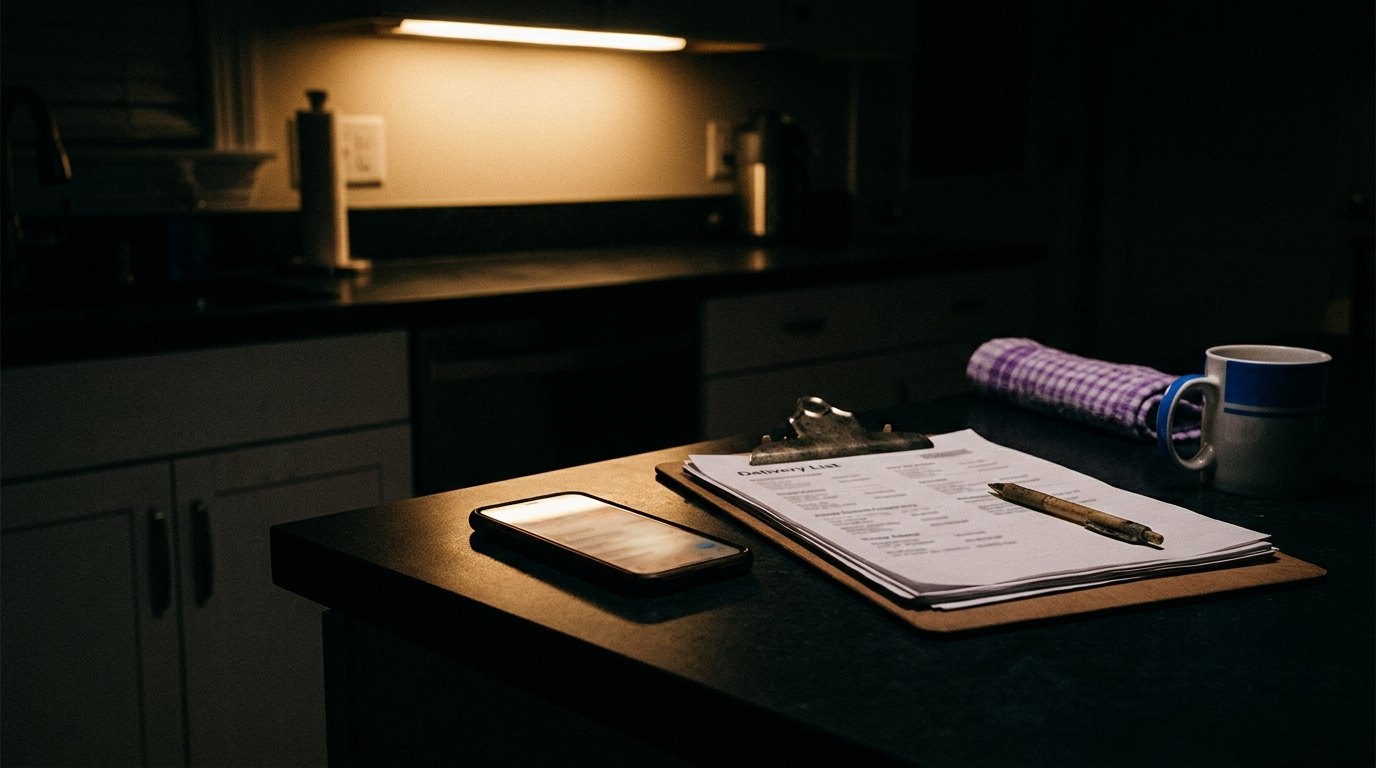
Then write a weekend plan on one sheet of paper, with whose phone rings on Saturday, which calls get answered on the spot, where the details get written down and who calls people back by when. Text a picture of it to everyone working that weekend.
Last, count. Open your phone's call history or your carrier's online account and go back two weeks. Mark every call that came in outside your open hours, plus the weekend calls that came in while you were on a job. Then mark the ones that didn't leave a voicemail. That second number is how many people tried you after hours and walked.
Four ways to cover the hours you're closed
Once you have your count, you're picking from four kinds of coverage. Each one works for somebody, and each one breaks somewhere.
The first is voicemail with a real promise. It's free, and it holds up fine when your after-hours count is small and you keep every callback time. Busy season is where it falls apart, when Sunday's callback list is longer than your Sunday.
The second is a family member or somebody on the crew holding the phone. Also free, more or less, and fine for a weekend. By the fourth Saturday in a row they're carrying tables with your phone in their pocket, and they're sick of it.
The third is paying a person to cover it, your own hire or an answering service. That person hits the same limit from Chapter 2. One call at a time, so when two calls come in together one of them waits or hangs up.
The fourth is a secretary that picks up only when you don't, which is what we built KaiCalls to do. Kai doesn't get the first call. Your phone rings first. If nobody picks up, Kai picks up, and after hours you can route calls straight to him. He takes the call and texts you the details, or he rings you when it's one of your pile-one emergencies. KaiCalls lays out how Kai handles tent rental calls, down to the venue details and guest count he asks for.
The smallest plan, Kai Backup, is $10 a month per KaiCalls' pricing page as of September 2026, and your cell still rings first on it.
One of the tent rental companies we answer calls for had a busy season like the one above. They'd been trying to hire somebody for the phone and couldn't fill the spot. With Kai picking up, they didn't have to. They had to hire more people to put up tents, because they were that busy. If you want to see how an event rental business set that up, read the event rental case study, and know going in that the rental company in it is my family's business.
And if your two-week count shows two after-hours calls, and you called both of them back by 8 the next morning, keep your voicemail. You don't need any of this yet.
Common questions
Questions this chapter gets asked
How should a small business handle after-hours calls?
Decide it in advance, in writing. Split calls into urgent ones, like a customer whose event is today, and everything else. Urgent calls go to a named person's phone. Everything else gets a voicemail greeting that says who they reached and exactly when you'll call back, and then you call back before that time. Count your after-hours calls for two weeks first, so you're fixing the real volume and not a guess.
Is an answering service worth it for weekend calls?
It depends on your count. If two weeks of call history show only a handful of weekend calls, a good voicemail and a fast callback cost nothing and work. If the count is high, paying someone can make sense, with one catch. A person, yours or a service's, can only be on one call at a time, so two callers at once still means one of them waits or hangs up.
What should an after-hours voicemail greeting say?
Keep it short. After your business name, tell the caller you're closed or out on a job, and give a specific time you'll call them back, like by 9 tomorrow morning. Skip as soon as possible, because it promises nothing. Only name a time you'll beat. If you have an emergency line for customers whose event is today, say so in one sentence and give them the number.
How do I know how many calls I get after hours?
Count them yourself for two weeks. Open your phone's call history or your carrier's online account, and mark every call that came in outside your open hours or on a weekend while you were working. Then mark which of those left no voicemail. Nobody else's statistic tells you this. Your own count shows how many people tried to reach you and moved on.
2.4 MB PDF
Get the PDF
The whole book in one file, with the figures, to read offline or pass to someone else.
Download the PDF